Reviews
Tile Pair Puzzle: Logic Challenge stands out by making two tiles move as one, turning simple sliding into a strategic exercise. The gradual difficulty curve means newcomers can learn without frustration, while later boards test even seasoned players. Clean visuals and responsive controls make it easy to pick up, but the move limits keep each puzzle engaging. It is a satisfying brain teaser for anyone who enjoys logic games.
Description
Core Gameplay
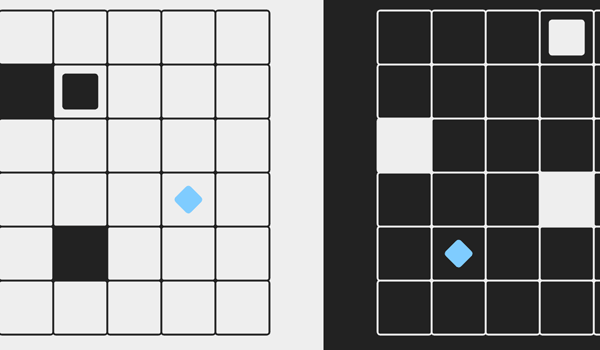
This puzzle game centers on a simple but challenging mechanic: a pair of tiles are permanently linked, so every move shifts both pieces simultaneously. Players drag or click to slide the duo up, down, left, or right until they stop at a wall or obstacle. The objective is to guide them over every glowing target on the board. Because both tiles move as one, each decision affects the position of both, demanding strategic thinking rather than quick reflexes.
Level Design and Progression
The game starts with small, open grids that help players grasp the basic movement patterns. As players advance, boards become more complex, introducing barriers and tighter spaces. Later puzzles require players to plan several steps ahead, as the linked tiles must navigate around obstacles without getting stuck. The difficulty curve is gradual, allowing newcomers to build skills while still offering satisfying challenges for experienced puzzle fans.
Visual Style and Accessibility
The interface uses clean, bright colors and simple shapes, making it easy to focus on the puzzle itself. Controls are responsive on both desktop and mobile devices, supporting mouse clicks and touch inputs. The design avoids clutter, so players can quickly assess the board and plan their next move. This visual clarity helps reduce frustration and keeps the experience enjoyable for all ages.
Move Limit and Strategy
Each puzzle comes with a limited number of moves, adding pressure to find efficient routes. Players must collect all targets before the counter runs out. This constraint encourages careful route planning and discourages random sliding. Successful completion often involves identifying the shortest path that allows both tiles to reach every target without wasting steps. Replaying a puzzle to improve one's move count adds replay value for those seeking mastery.





Comments
Sign in to leave a note
You must be logged in before posting a review or rating.
No account? Create one
No comments yet. Be the first to comment!